
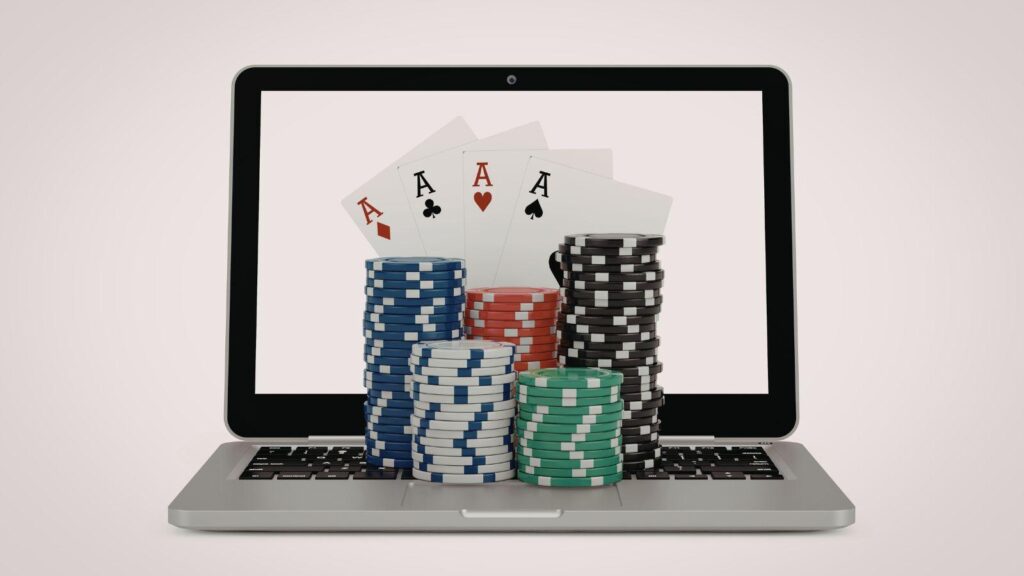
Video poker has gone through a genuinely interesting transformation — from clunky mechanical cabinets to the kind of high-variance digital experiences that can drain a bankroll in seconds or pay out a royal flush across 100 hands simultaneously. If you’re trying to maximize your payback percentage and actually understand what you’re playing, that history matters. Today’s landscape blends classic poker logic with some surprisingly sophisticated technology, and it’s moved well past the single-hand machines most people picture when they think of video poker.
This guide breaks down the architecture behind modern video poker — how RNG technology made multi-hand mechanics possible, what the real mathematical differences are between gaming classifications, and which platforms are actually worth your time right now.
How Did Video Poker Evolve from Physical Cabinets to Digital Platforms?
Video poker evolved from physical cabinets to digital platforms by moving from limited mechanical drums to computerized microprocessors, and eventually to HTML5 software stacks built for mobile play. That shift didn’t just change the interface — it removed the hard physical ceiling of 50-card mechanical decks entirely, opening the door to gameplay variations that simply weren’t possible before.
It started in the 1970s, when engineers at companies like Bally Casino and Fortune Coin Company began experimenting with video monitors. But the real turning point came from Si Redd, whose company SIRCOMA (Si Redd’s Coin Machines) — later rebranded as International Game Technology (IGT) — reshaped the casino floor. Establishing Jacks or Better as the baseline gave the industry a mathematically grounded starting point that everything else built on.
The next big leap happened when those games moved online. Early platforms basically ported the physical logic into stripped-down digital apps — functional, but not exactly elegant. Today, developers work with responsive HTML5 and WebGL frameworks to bring authentic IGT video poker online directly into browsers and mobile environments. The cabinet experience is replicated faithfully, but now the engine can generate rapid, simultaneous hands without any mechanical bottleneck.
What Is the Difference Between Class II and Class III Video Poker RNG?
The core difference: Class II video poker uses a centralized electronic bingo draw to determine your outcome, while Class III video poker runs an independent RNG for mathematically authentic card shuffling. If you care about playing real poker probabilities, Class III is the only version that actually delivers that.
The distinction comes from the Indian Gaming Regulatory Act (IGRA), which led tribal and state gaming agencies to set up separate classifications. In a Class II machine, your dealt hand and drawn cards are matched retroactively to a bingo outcome that was already decided before you touched the screen. Discard a winning combination? “Angel features” kick in — the system mathematically forces a replacement winning hand to align your payout with the server’s predetermined bingo draw. It looks like poker. It isn’t, really.
The Mechanics of True Digital Shuffling
In a genuine Class III platform, the algorithm cycles through millions of pseudo-random numbers every second. Hit “Deal” and the RNG freezes on your initial five cards. Hit “Draw” and a completely separate, independent RNG cycle pulls your replacement cards from the remaining 47 in the virtual deck. That independence is what makes it possible to calculate a game’s precise theoretical return and house edge with any real accuracy. Without it, you’re just guessing.
The Multi-Hand Mathematical Shift: How Do 100-Play Mechanics Alter Variance?
100-play mechanics dramatically increase short-term mathematical variance by exposing your initial held cards to 100 independent RNG outcomes at once. The theoretical return stays identical to a single-hand game — that part doesn’t change. But the bankroll swings? Those get aggressive fast.
Once developers recognized that digital platforms had no physical constraints, Multi-hand Poker became inevitable. Whether you’re running the Deuces Wild MH slot, Joker Poker, or Aces and Faces, holding something like three-to-a-royal across 50 or 100 hands can produce massive multiplier payouts. The flip side — holding a weak hand — drains credits at 100 times the normal rate. That’s not a small detail.
Bankroll Strategy for High-Speed Multi-Play Variants
Variants like Spin Poker, Multi Strike Poker, and Ultimate X aren’t just faster versions of standard video poker — they require a different approach to bankroll management entirely. You’re paying for every individual line, so standard deviation spikes in ways that catch a lot of players off guard. The most common mistake I’ve seen is carrying over a single-hand betting unit to a 50-play machine. That’s a fast way to go broke. To actually survive the variance when you play multi-hand video poker online, scaling down your base coin denomination isn’t optional — it’s the math.
Which Modern Casino Platforms Drive the Best Multi-Hand Experiences Today?
The best multi-hand platforms combine advanced digital wallets, clean HTML5 interfaces, and high-RTP variants running on servers that don’t lag under load. That last part matters more than people give it credit for — a stuttering connection mid-draw on a 100-play hand is genuinely painful.
Operators like Casino Betriviera and mobile-focused developers like Jackpot Mobile have built solid environments for titles like Bonus Poker and Double Double Bonus. Responsible gaming tools are built in, UI scaling works across devices without friction, and payout processing is fast. These aren’t flashy differentiators, but they’re the ones that actually affect your session.
Looking ahead, Blockchain technology and Smart contracts are starting to make verifiable, transparent payout percentages and instant crypto withdrawals a real option — not just a marketing claim. And experimental work in Virtual Reality (VR), Augmented Reality (AR), and Live Streaming is slowly closing the gap between solitary RNG play and something that feels more like a live casino environment. Whether that’s the future of video poker or just an interesting detour, I’m not sure yet — but the technology is moving fast enough that it’s worth watching.