
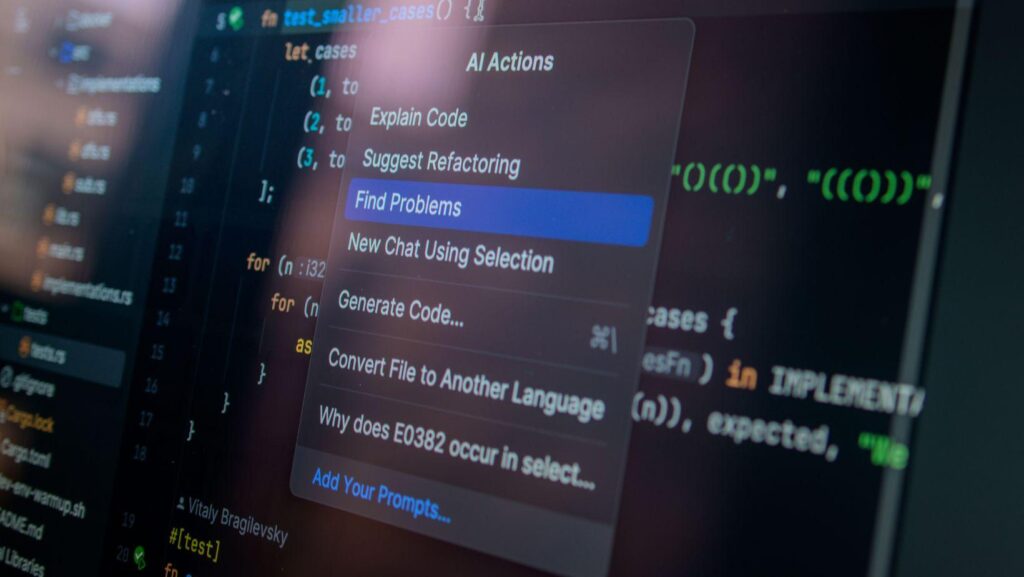
For years, the enterprise software development lifecycle has been a grueling marathon of requirements gathering, endless sprint planning, and late-night debugging sessions that tested the patience of even the most stoic engineers. But something rather extraordinary has been happening in the background, almost without anyone throwing a parade about it. The humble coding assistant, once dismissed as a neat toy for hobbyists, has matured into a legitimate force multiplier for massive development teams. The real kicker is that this isn’t just about autocompleting a few lines of boilerplate anymore; we are witnessing a fundamental shift in how complex systems are designed, built, and maintained. It has gotten to the point where evaluating the landscape often brings developers to compare tools like the recently discussed Claude Code and Retool, each offering distinct approaches to bridging the gap between natural language intent and functional backend logic.
The Productivity Paradox: More Code, Less Toil
One of the most immediate and visible impacts of these AI companions is the dramatic compression of the “time-to-code” metric. Instead of spending forty-five minutes searching through Stack Overflow or digging through internal documentation to remember the exact syntax for a legacy API call, developers can now simply articulate their intent in plain English and receive a working snippet in seconds. This does not mean that the software engineers are becoming lazy; quite the opposite, in fact. By offloading the mundane, repetitive grunt work—think writing getters and setters, constructing basic CRUD operations, or mapping JSON payloads—these assistants free up the human brain for the truly gnarly problems. This shift allows developers to spend more mental energy on system architecture, data flow optimization, and security considerations, which are the elements that actually determine whether an enterprise application survives contact with the real world.
Bridging the Documentation Gap
Enterprise environments are infamous for their sprawling, often contradictory, and occasionally ancient codebases that no single individual fully understands. Here, AI tools are proving to be surprisingly adept at acting as a sort of runtime translator. When a new hire joins a massive project, they no longer have to rely solely on the oral traditions of the team or the hope that the wiki was updated in the last decade. These intelligent assistants can parse the existing code structure, infer relationships between modules, and provide contextual explanations that drastically shorten the onboarding curve. This capability is a game-changer for large organizations where developer turnover can cause catastrophic knowledge loss, essentially creating a living documentation layer that evolves alongside the code itself.
The Quality Conundrum
However, it would be extremely naive to suggest that this transition is entirely smooth sailing. The convenience of generating code with a simple prompt introduces a new set of complexities, particularly concerning quality assurance. When a machine generates a block of logic, it does so with the confidence of absolute ignorance—it lacks the healthy paranoia of a senior engineer who has been burned by edge cases before. Consequently, development teams are discovering that their role is shifting from “writing code” to “reviewing and validating code.” This democratization of code generation means that standards for code review are becoming more rigorous, not less. Teams must enforce stricter linting, more comprehensive test coverage, and a greater emphasis on static analysis to ensure that the AI’s suggestions align with the enterprise’s architectural principles.
The Security Tightrope Walk
Let’s not beat around the bush: security is the elephant in the room. Feeding proprietary business logic or sensitive internal data into a third-party API is a risk that keeps chief information security officers up at night. The enterprise adoption of AI coding tools has necessarily forced a conversation about data residency, model training clauses, and the sanitization of inputs. More forward-thinking organizations are exploring private or on-premise deployments of these models, ensuring that the AI’s training stays off the open internet. The consensus seems to be that while the benefits of AI assistance are too significant to ignore, the guardrails must be built before the car is driven, not after the crash.
The Evolution of the Developer Mindset
Beyond the technical and security hurdles, the most profound change might actually be psychological. There is a subtle but undeniable anxiety permeating the developer community about job displacement. Yet, in the enterprise context, this fear seems to be largely misplaced. The reality is that AI is not replacing developers; it is redefining what it means to be a developer. The role is evolving into something more akin to an orchestra conductor rather than a musician playing every instrument. The value proposition shifts from the ability to memorize syntax to the capacity for logical reasoning, systems thinking, and the deep understanding of business requirements.
Collaboration and the Changing Workflow
Project management methodologies are also beginning to bend to this new reality. The rigid structure of two-week sprints might become less relevant when an AI can autonomously generate a pull request for a specific feature in a matter of hours. Managers are learning to plan for the “optimization phase,” where the time saved on boilerplate is reinvested into refactoring, performance tuning, and reducing technical debt—things that were almost always deprioritized in the past due to time constraints. This leads to healthier codebases and, ultimately, happier teams.
Looking Ahead: The New Normal
With AI tools now woven into IDEs and CI/CD workflows, they’re quickly shifting from experimental add-ons to standard fare. The real conversation isn’t about whether to adopt them, but how to wield them wisely. Success won’t go to the companies flaunting the biggest models—it’ll belong to those who prioritize human judgment, creative problem-solving, and rigorous review. At the end of the day, enterprise software isn’t a battle between people and machines; it’s a collaboration where both bring their best to the table.