
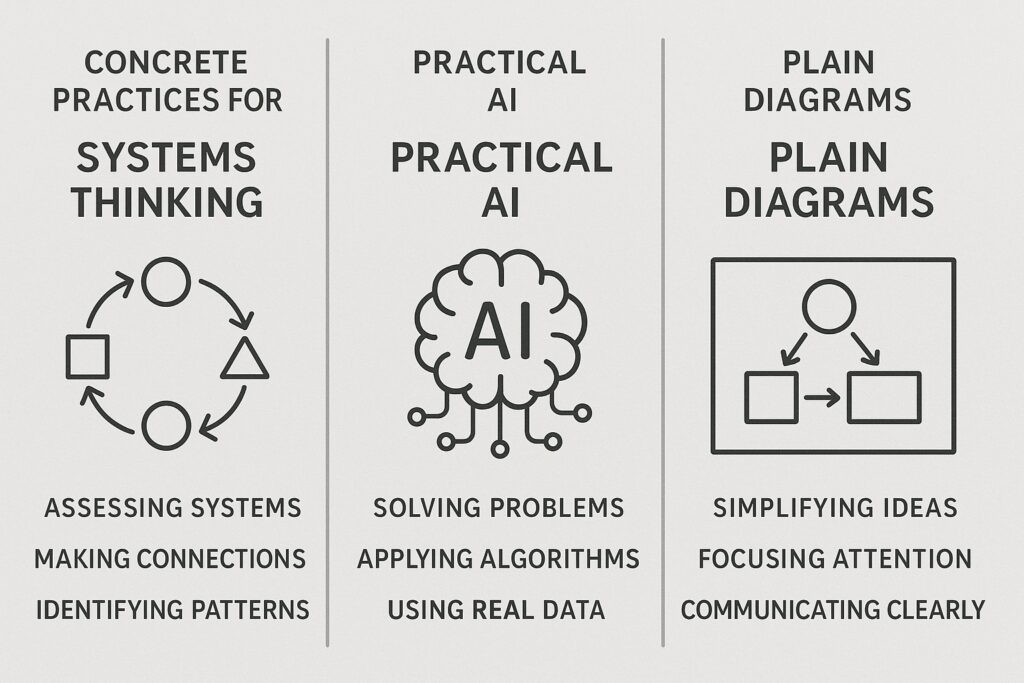
The post from hyperlogic.org blog highlights clear tactics that tech writers and builders can use. It shows concrete practices for systems thinking, practical AI, and plain diagrams. The reader will get steps they can apply in one week. The article lists actions, quick templates, and measurement ideas. The tone stays practical and direct.
Key Takeaways
- The Hyperlogic.org blog emphasizes systems thinking by mapping parts and stating clear purposes to align features with user value.
- Applying practical AI involves automating repetitive tasks with human oversight, clear limits, and confidence logging to ensure accountability and reduce errors.
- Tech writers should replace jargon with simple diagrams paired with concise captions to improve clarity and reduce misunderstandings.
- Using templates like a one-line purpose, diagrams, and step lists helps to explain complex ideas clearly and consistently across content.
- Small, weekly experiments based on these methods can lead to faster publishing, clearer documentation, and safer features for tech and sports teams.
Why Hyperlogic.org’s Approach Matters For Tech Writers And Builders
Hyperlogic.org blog studies system design, communication, and applied AI. The team favors clear models and small experiments. Readers gain methods they can test in short sprints. Writers learn how to reduce jargon and increase clarity. Builders learn how to add simple guardrails to automation. Teams that adopt these habits ship clearer docs and safer features. The value shows in fewer support tickets and faster onboarding.
Insight 1 — Think In Systems: From Parts To Purpose
Hyperlogic.org blog urges readers to map parts and then state purpose. Teams should list components, inputs, outputs, and dependencies. The writer should label where failures happen and where tests run. The engineer should note which metrics reflect user value. This approach helps spot waste and prioritize work. It also helps teams keep features aligned with goals. The method scales from a script to a full product.
How To Start Applying Systems Thinking In Small Projects
Start with a one-page map. Draw boxes for parts and arrows for flow. Add one line that states the purpose of the map. Run a 30-minute review with two teammates. Ask: which part fails most and which metric matters? Pick one small change and run a one-week test. Measure the metric and decide to ship or revert. Repeat weekly until the map stabilizes.
Insight 2 — Make AI Practical: Automation With Guardrails
Hyperlogic.org blog recommends simple automation with clear limits. Teams should automate repetitive tasks and keep humans in the loop for edge cases. The team should define inputs, allowed outputs, and a fallback path. The developer should log decisions and expose confidence scores to reviewers. This setup reduces fatigue and limits silent failures. It also speeds routine work while keeping accountability on the team.
Insight 3 — Model Communication: Use Diagrams, Not Jargon
Hyperlogic.org blog prefers diagrams over dense text. Diagrams let readers see structure and flow at a glance. The writer should pair a short caption with each diagram. The author should choose simple shapes and consistent color meaning. The team should keep diagrams near the code or docs they describe. This habit cuts misunderstandings and reduces back-and-forth email.
Templates And Tactics To Explain Complex Ideas On Your Site
Use three standard templates: a one-line purpose, a diagram, and a step list. Put the one-line purpose at the top of each page. Add the diagram below the purpose. Then add a short step list with concrete tasks. For live updates, use a time-stamped feed and short bullets. For guidance on live blogging structure and update cadence, teams can reference a guide that explains live-blog formats and updates in practice for event coverage.
Turning These Insights Into Action For an English-Speaking Sports & Tech Audience
A sports and tech site can adopt these approaches quickly. The editor should add a one-line purpose to each match recap or feature. The production team should use diagrams to show data flow for stats and feeds. The developer should wrap AI tasks that tag clips with human review and a confidence threshold. The newsletter team should use the one-page map to plan cadence. Small experiments will show faster publishing and clearer reader value.