
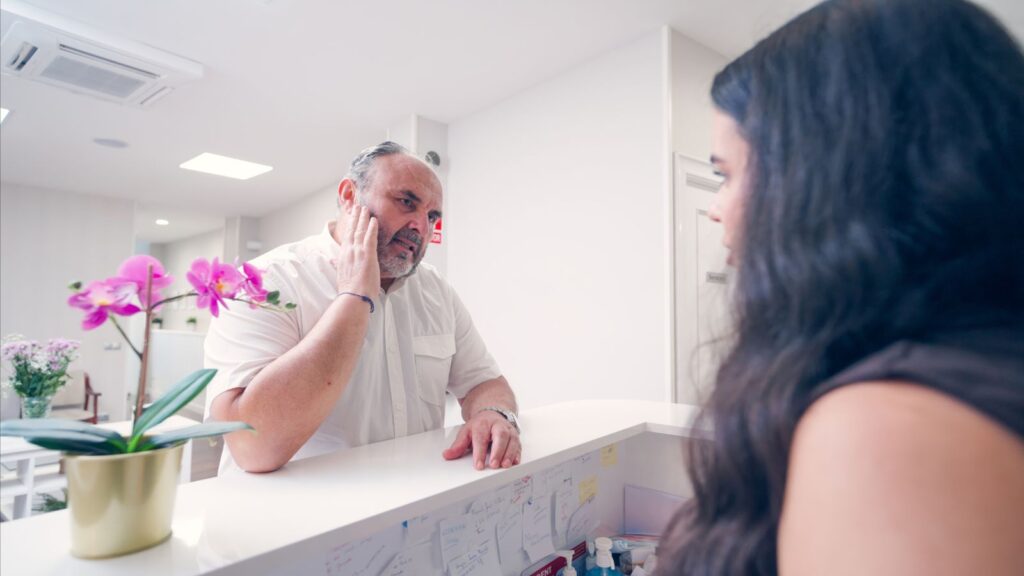
Most dental practices don’t lose new patients because of poor care. They lose them when the phone isn’t answered.
Front desks are under constant pressure, and staffing has been tight for years. The ADA Health Policy Institute has consistently identified staffing as a top concern among dentists, and missed calls are an everyday reality.
AI receptionists are designed to support busy front desks by answering calls around the clock and reducing drop-offs during peak hours. In this post, we look at how they fit into dental practice operations and what to consider before adding one.
What Is an AI Receptionist for Dentists?
An AI receptionist for dentists is software that uses artificial intelligence to answer and manage patient calls and messages. It functions as a virtual front desk, handling many of the tasks traditionally done by a full-time receptionist.
Most AI receptionists can:
- Answer incoming calls and messages
- Greet patients and understand their requests
- Schedule, confirm, or reschedule appointments
- Answer common questions about hours, services, or insurance
- Capture new patient details and route urgent issues
Unlike a basic phone tree, an AI receptionist understands open-ended questions such as “Do you take Delta Dental?” or “Can I move my cleaning to next week?” and responds in plain language.
Vendors generally take one of two approaches:
- Dental-specific AI tools: Built specifically for dental practices, often with pre-set workflows for hygiene recalls, insurance questions, and routine scheduling
- Unified communication platforms with AI: Combine AI reception with cloud phone, messaging, and contact center tools in a single system
Both approaches can handle routine calls, but they differ in how well they integrate with your practice management system, support multiple locations, and fit into existing workflows.
3 Top AI Receptionist Solutions for Dental Practices
After reviewing multiple platforms used by dental practices, these solutions stand out for their reliability, depth of integration, and real-world front-desk impact.
1. Nextiva
Nextiva offers a unified communications platform that includes its XBert AI receptionist, along with cloud phone and messaging tools. For dental practices, this means AI call handling that integrates directly with the phone system rather than operating as a separate layer.
The AI-powered answering service answers patient calls, handles scheduling requests, and routes inquiries based on practice rules. Because everything lives in one system, staff gain better visibility into call activity and patient interactions. This setup works well for both single-location and multi-location dental practices.
Key features
- AI receptionist integrated with cloud phone system
- Intelligent call routing and appointment handling
- Custom greetings and call flows
- CRM and calendar integration
- Call reporting and performance analytics
Pricing: Starts at $99 per month for the first 100 interactions, with additional interactions billed per use.
2. AnswerConnect
AnswerConnect focuses on live answering services with limited AI support. Calls are primarily handled by human agents, making it a fit for practices that prioritize personal interaction.
The service answers calls, takes messages, and routes inquiries based on instructions provided by the office. It requires minimal technical setup but offers less automation compared to AI-first platforms. Costs are typically higher due to the human staffing model.
Key features
- Live human call answering
- Call routing and message delivery
- Appointment scheduling assistance
- Call screening and intake support
Pricing: Pricing is quote-based and typically depends on call volume and coverage hours.
3. Smith.ai
Smith.ai provides AI-powered virtual receptionists with optional human support. The platform is commonly used for lead qualification, appointment booking, and call screening.
AI handles routine calls, while human agents step in when conversations require judgment. Smith.ai integrates with many scheduling tools and CRMs, making it popular with professional service businesses. It operates more as a receptionist service than a full phone system replacement.
Key features
- AI-powered call answering and screening
- Live virtual receptionist backup
- Appointment scheduling
- CRM and calendar integrations
- Spam and unwanted call filtering
Pricing: Plans typically start around $95 per month, with higher tiers based on call volume and live agent usage.
Comparison of AI Receptionist Platforms for Dental Practices
| Platform | Core Model | Primary Channels | Starting Price* |
| Nextiva | AI receptionist + phone system | Phone, SMS | From $99/month |
| AnswerConnect | Live answering service | Phone | Quote required |
| Smith.ai | AI + human receptionist | Phone, chat | From ~$95/month |
*Pricing is based on entry-level plans and may vary by usage and configuration.
Benefits of an AI Receptionist for Dental Practices
An AI receptionist helps dental practices address key operational issues without adding staff.
- Fewer missed calls: Calls are answered during peak hours and after hours, reducing lost new patient opportunities.
- Less front-desk strain: Routine questions and overflow calls are handled automatically, which is important given staffing remains a challenge, as highlighted by the ADA Health Policy Institute.
- Better patient experience: Patients get faster responses and easier scheduling with less hold time.
- Clear call visibility: When paired with a professional phone system like Nextiva, practices can see call volume and missed-call gaps, rather than guessing.
An AI receptionist works best when it supports how a dental practice already operates. When paired with a reliable phone system like Nextiva, it becomes a practical way to protect patient intake without adding complexity.

Common Concerns and Limitations to Consider
AI reception can help a lot, but it isn’t a complete replacement for human staff. Going in with clear expectations matters.
What AI can’t fully replace
AI works best for routine calls, not sensitive or complex situations. Practices should plan for clear handoffs to humans when needed.
- Empathy and judgment: Emotional conversations, billing disputes, and complaints still require a person
- Complex or urgent calls: Emergencies and nuanced clinical questions should route directly to trained staff
- Data privacy: Dental practices must confirm HIPAA-compliant setup, secure data handling, and business associate agreements
Team adoption is another key factor. Staff may worry about automation or feel unsure when to step in. Clear communication helps, AI should be positioned as support, not replacement. Involving staff in scripts and call rules usually improves buy-in.
Using a single communication platform, such as Nextiva, can also reduce friction. When AI reception is part of the phone system staff already use, training is simpler and adoption tends to be smoother.
Implementation Checklist for Your Practice
Once you select an AI receptionist, a clear rollout helps protect both your team’s time and the patient experience.
Start by aligning your staff on the reason for the change. Explain the goal clearly: fewer missed calls, less front-desk strain, and better patient access. Assign one point person to manage scripts, review reports, and act as the link between your team and the vendor. From there, map basic call flows to clarify which calls the AI handles first and when a human steps in.
Before relying on the system, run internal tests. Have staff call in as if they were patients and listen for confusing prompts, delays, or routing issues. These early adjustments prevent small problems from becoming daily frustrations.
After launch, focus on a short list of signals:
- Are more calls being answered?
- Are bookings and no-shows trending in the right direction?
- Are patients finding phone and text interactions easier?
Review results regularly and tweak scripts or routing as needed. Most practices see noticeable improvements within the first few weeks as the system is refined.
Next Steps for Dentists
For dental practices dealing with missed calls and front-desk strain, an AI receptionist can be a practical upgrade, and not a major overhaul. The key is choosing a solution that fits your practice’s existing workflow.
Nextiva has a fully integrated AI receptionist with a reliable phone system, simplifying onboarding and implementation. Calls are handled, data stays connected, and teams don’t have to manage multiple tools.
When implemented thoughtfully, AI reception helps protect new patient opportunities while allowing your staff to focus on in-office care.